
Cabinet Handle Size Guide: How to Choose the Right Size for Your Cabinets
Choosing the right cabinet handle is not only about colour, finish or design. Size matters just as much. A handle that is too small can look lost on a wide…
By Shahid Iqbal & Co — — 10 min read
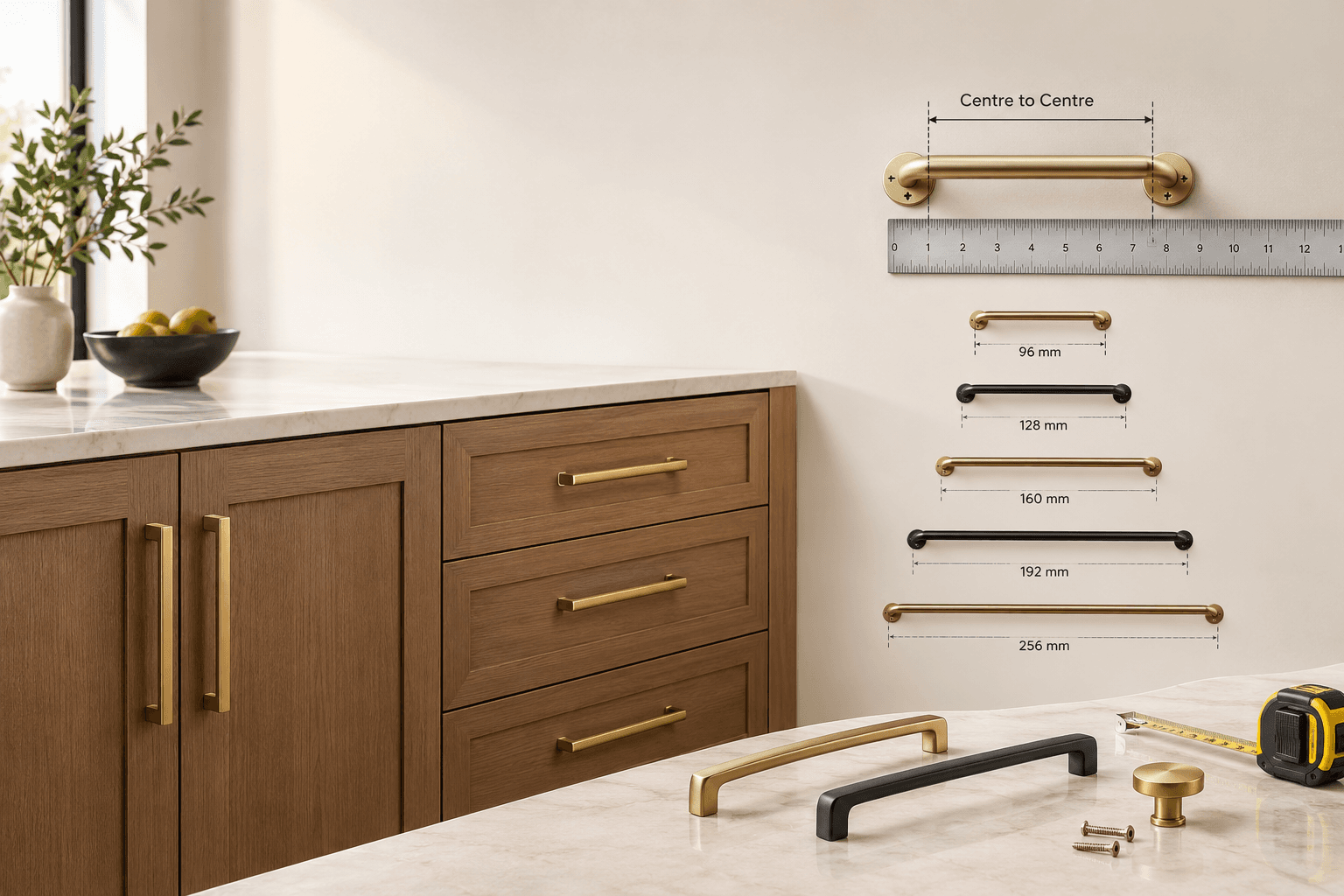
Choosing the right cabinet handle is not only about colour, finish or design. Size matters just as much. A handle that is too small can look lost on a wide drawer, while one that is too large may feel uncomfortable or visually overpower the cabinet. Whether you are renovating a kitchen, upgrading wardrobes, replacing old drawer handles or selecting hardware for new furniture, understanding cabinet handle sizes and centre-to-centre measurements can help you make the right choice the first time. At Siqbal Hardware, we believe good cabinet hardware should combine appearance, comfort and practical functionality. This guide explains the most common cabinet handle sizes, how to measure them and how to select the right size for different cabinets and drawers.
What Does Cabinet Handle Size Mean? When shopping for a bar-style cabinet handle, you may see measurements such as 96mm, 128mm, 160mm or 192mm.
These measurements normally refer to the centre-to-centre (C-C) distance between the two fixing holes.
For example, a cabinet handle described as 128mm centre-to-centre has 128mm between the centre of one screw hole and the centre of the other.
This is different from the overall length of the handle. A handle may therefore have: 128mm centre-to-centre spacing A longer overall length Additional material extending beyond the fixing points
This distinction is particularly important when replacing existing cabinet handles because the new handle needs to match the existing hole spacing if you want to avoid drilling new holes.
Centre-to-Centre vs Overall Handle Length One of the most common mistakes when buying cabinet handles is confusing overall length with centre-to-centre measurement.
Imagine your existing cabinet has two screw holes. Measure from the centre of the first hole directly to the centre of the second hole.
That measurement is your centre-to-centre size.
For replacement hardware, this should normally be your first measurement.
The overall length tells you how large the handle will appear on the cabinet, while the centre-to-centre measurement determines whether the handle will fit the existing holes.
Common Cabinet Handle Sizes
Cabinet handles are available in many sizes, but some measurements are particularly common in kitchen cabinets, wardrobes and furniture.
Centre-to-Centre Size Typical Application 96mm Small drawers, cabinet doors and compact furniture 128mm Standard cabinet doors, drawers and kitchen furniture 160mm Wider drawers, larger cabinet doors and wardrobes 192mm Wide drawers and larger cabinet fronts 224mm Large drawers and contemporary furniture 256mm Wide drawers and larger wardrobe or cabinet fronts 320mm+ Extra-wide drawers, large furniture and statement applications
These are guidelines rather than strict rules. The correct size also depends on the dimensions of your cabinet, the design of the handle and the overall appearance you want to achieve.
96mm Cabinet Handles – A Practical Choice for Smaller Cabinets
96mm cabinet handles are a popular choice for smaller drawers and cabinet doors.
They work particularly well where the cabinet front is relatively narrow and a longer handle would look disproportionate.
Consider 96mm handles for:
Small kitchen cabinet doors Bathroom vanities Bedside cabinets Small drawers Compact furniture Traditional-style cabinets
If you have several small cabinet fronts, using the same 96mm handle throughout can create a clean and consistent appearance.
128mm Cabinet Handles – A Versatile Everyday Size
128mm cabinet handles are one of the most versatile choices for modern furniture.
They can work well on standard drawers and cabinet doors and are particularly useful when you want one handle size across several different furniture applications.
128mm handles can be considered for:
Kitchen drawers Standard cabinet doors Bedroom furniture Wardrobes Office cabinets General furniture projects
If you are designing new cabinetry and are unsure where to start, 128mm is a practical size to consider for many standard applications.
160mm Cabinet Handles – For Wider Drawers and Larger Fronts
As cabinet fronts become wider, a small handle can begin to look out of proportion.
This is where 160mm cabinet handles become useful.
They are suitable for:
Medium to wide kitchen drawers Larger cabinet doors Tall storage units Wardrobes Contemporary furniture
A longer handle can also provide a more substantial grip, particularly on drawers that are frequently opened and closed.
192mm and Larger Cabinet Handles
For wide drawers, pan drawers and large furniture fronts, 192mm, 224mm, 256mm and larger handles can provide better visual balance.
A very wide drawer with a tiny handle may look unfinished. A longer handle helps the hardware relate to the size of the cabinet front.
For particularly wide drawers, you can also consider using two handles instead of one extremely long handle. This can provide both a balanced appearance and comfortable operation.
How to Measure Your Existing Cabinet Handles
If you are replacing existing handles, do not guess the size.
Follow these simple steps:
Step 1: Locate the Two Screw Holes
Look at the back or front of your cabinet door or drawer and identify the two fixing holes used by the existing handle.
Step 2: Measure Centre to Centre
Using a ruler or measuring tape, measure the distance from the centre of one screw hole to the centre of the other screw hole.
Step 3: Record the Measurement in Millimetres
Write down the measurement.
For example, if you measure approximately 128mm, look for a handle with 128mm centre-to-centre spacing.
Step 4: Check the Overall Length
Once the fixing size is confirmed, check the overall length of the new handle.
This helps you understand how the handle will look on the cabinet before purchasing.
Step 5: Check the Door or Drawer Thickness
Also check whether the supplied screws are suitable for your cabinet thickness. Different furniture materials and door thicknesses may require different screw lengths.
What Size Handle Should I Choose for a Drawer?
A useful starting point is to consider the width of the drawer front.
Smaller drawers generally look better with smaller handles, while wider drawers can accommodate longer pulls.
As a general design guide:
Small drawers: 96mm or 128mm Medium drawers: 128mm or 160mm Wide drawers: 160mm, 192mm or larger Very wide drawers: 224mm, 256mm, 320mm or multiple handles
One common design principle is to choose a handle whose overall length occupies a meaningful proportion of the drawer front. The exact proportion is flexible, but the objective is always the same: the handle should look intentional rather than too small or unnecessarily oversized.
What Size Handle Should I Choose for a Cabinet Door?
Cabinet doors are different from drawers because the handle is usually mounted vertically.
For smaller doors, 96mm or 128mm handles can provide a neat appearance.
For taller doors, wardrobes and larger storage units, 160mm or longer handles can create better visual balance.
The height and width of the door should always be considered together with the handle design.
Cabinet Handle Size for Wardrobes
Wardrobes often have taller doors than kitchen cabinets, which means handle size becomes particularly noticeable.
For a standard wardrobe, 128mm or 160mm handles may provide a balanced appearance.
For tall wardrobe doors, longer handles can create a more contemporary look while also making the door easier to operate.
If your wardrobe has multiple doors, consistency is important. Using the same handle style and a logical size throughout the wardrobe can make the entire installation look more professional.
Should All Cabinet Handles Be the Same Size?
Not necessarily.
In a kitchen, for example, you may use:
96mm handles on smaller doors 128mm handles on standard cabinets 160mm handles on wider drawers Longer handles on large pan drawers
The important thing is to maintain visual consistency.
Using the same finish and design across different sizes can create a coordinated appearance even when the actual handle dimensions vary.
For example, a kitchen could use the same brass cabinet handle design in 96mm, 128mm and 160mm sizes.
Cabinet Handle Size and Style
Size should also match the style of your furniture.
Modern Cabinets
Longer, slimmer bar handles can work particularly well with modern cabinetry. Clean lines and consistent spacing create a contemporary appearance.
Traditional Cabinets
Smaller handles and knobs can complement traditional or classic furniture designs.
Minimalist Cabinets
Slim handles with simple profiles can maintain the clean appearance associated with minimalist interiors.
Wardrobes and Large Furniture
Longer handles can provide a stronger visual feature and make tall doors easier to operate.
Don't Choose a Handle by Size Alone
Although size is important, there are several other factors to consider before purchasing cabinet hardware.
- Finish
Consider the existing colours and finishes in your room.
Popular options include:
Brass Antique brass Golden finishes Matte black Aluminium Stainless steel Other contemporary finishes
- Material
The material affects the appearance, durability and feel of the handle.
- Projection
Projection refers to how far the handle extends from the cabinet surface.
A handle should provide enough clearance for comfortable use without unnecessarily projecting too far.
- Grip
A beautiful handle should also be comfortable to use.
The diameter, shape and profile of the handle can make a significant difference to everyday usability.
- Installation
Always check the fixing method and supplied screws before installation.
A Simple Cabinet Handle Size Checklist
Before ordering your new cabinet handles, ask yourself:
- Am I replacing existing handles?
If yes, measure the centre-to-centre hole spacing first.
- What is the width or height of the cabinet front?
Use this to determine an appropriate visual proportion.
- What is the overall length of the handle?
Remember that overall length and centre-to-centre spacing are different measurements.
- What finish matches my furniture?
Choose a finish that complements your kitchen, wardrobe or furniture.
- Is the handle comfortable to grip?
Good hardware should look attractive and feel practical.
- Are the supplied screws suitable?
Check the cabinet thickness before installation.
Cabinet Handle Size Guide: Quick Reference
If you want a simple starting point:
96mm → Smaller doors and drawers 128mm → Standard cabinets and drawers 160mm → Wider drawers and larger doors 192mm → Wide drawers and larger cabinet fronts 224–256mm → Large drawers and contemporary furniture 320mm+ → Extra-wide drawers and large furniture
Remember that these are starting points, not fixed rules. The best cabinet handle size depends on the furniture dimensions, existing hole spacing, design style and personal preference.
Upgrade Your Cabinets with the Right Hardware
A cabinet handle may be a small component, but it can have a surprisingly large impact on the appearance and usability of furniture.
Whether you are upgrading a kitchen, installing a new wardrobe or replacing old cabinet hardware, taking a few minutes to measure the centre-to-centre distance can save you from ordering the wrong size and having to drill new holes.
At Siqbal Hardware, we offer cabinet hardware designed to combine practical functionality with attractive finishes and contemporary styling.
Explore our collection of cabinet handles and knobs to find hardware for kitchens, wardrobes, drawers and furniture projects.
Measure carefully. Choose the right size. Give your furniture the finishing touch it deserves.
Frequently Asked Questions What is the most important measurement when replacing cabinet handles?
The centre-to-centre distance between the existing fixing holes is the most important measurement because it determines whether the replacement handle will fit the existing holes.
What are the most common cabinet handle sizes?
Common sizes include 96mm, 128mm, 160mm and 192mm, with larger sizes available for wider drawers and furniture.
Is 128mm a good size for kitchen cabinet handles?
128mm is a versatile option for many standard kitchen cabinet doors and drawers, although the best size depends on the dimensions of the cabinet and the desired appearance.
How do I measure cabinet handle size?
Measure from the centre of one fixing hole to the centre of the other fixing hole. Record the measurement in millimetres.
Is overall handle length the same as centre-to-centre size?
No. Centre-to-centre is the distance between the fixing holes, while overall length is the total physical length of the handle.
What size handle is best for a wide drawer?
Wider drawers generally suit longer handles such as 160mm, 192mm, 224mm, 256mm or larger. For very wide drawers, two handles can also be considered.
Can I replace cabinet handles without drilling new holes?
Yes, provided the replacement handles have the same centre-to-centre fixing measurement as the existing holes.
Final Thought
The right cabinet handle is a combination of size, proportion, comfort, finish and functionality.
Before buying, measure your existing holes, understand the difference between centre-to-centre spacing and overall length, and consider how the handle will look against the entire cabinet front.
A few minutes of careful measurement can make the difference between a cabinet that simply works and one that looks properly finished.
Looking for cabinet handles in Pakistan? Explore Siqbal Hardware for cabinet handles, knobs and furniture hardware for your next project.
Ready to choose?
Every product page lists the exact size, finish and hole spacing. Not sure what fits? Send us your measurements on WhatsApp at +92 311 7798157 and we will help you pick.
More guides
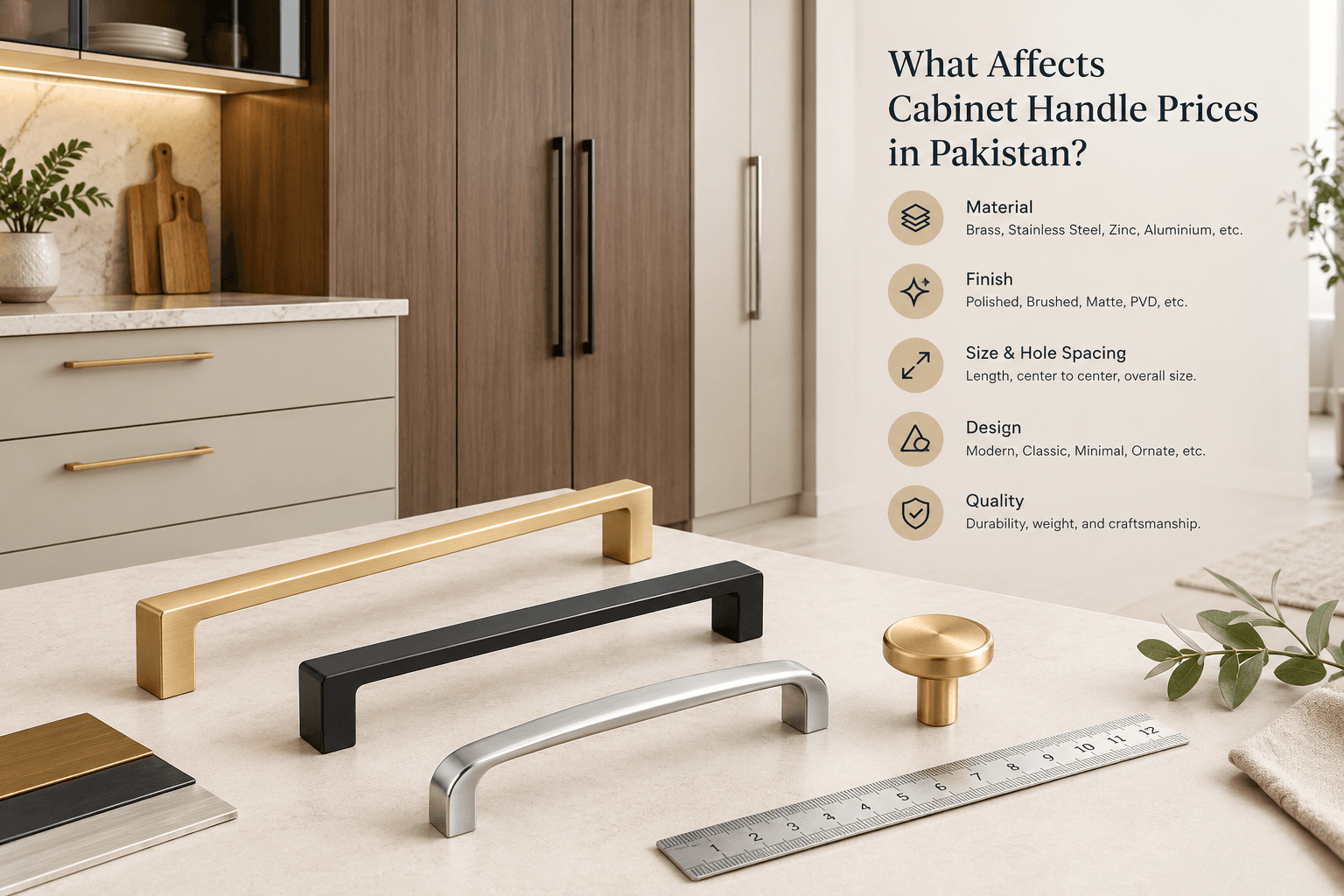
Cabinet Handles Price in Pakistan: What Determines the Cost?
Cabinet Handles Price in Pakistan: What Determines the Cost? If you are searching for cabinet handles price in Pakistan, you will quickly notice that prices…
4 October 2026 — 7 min read
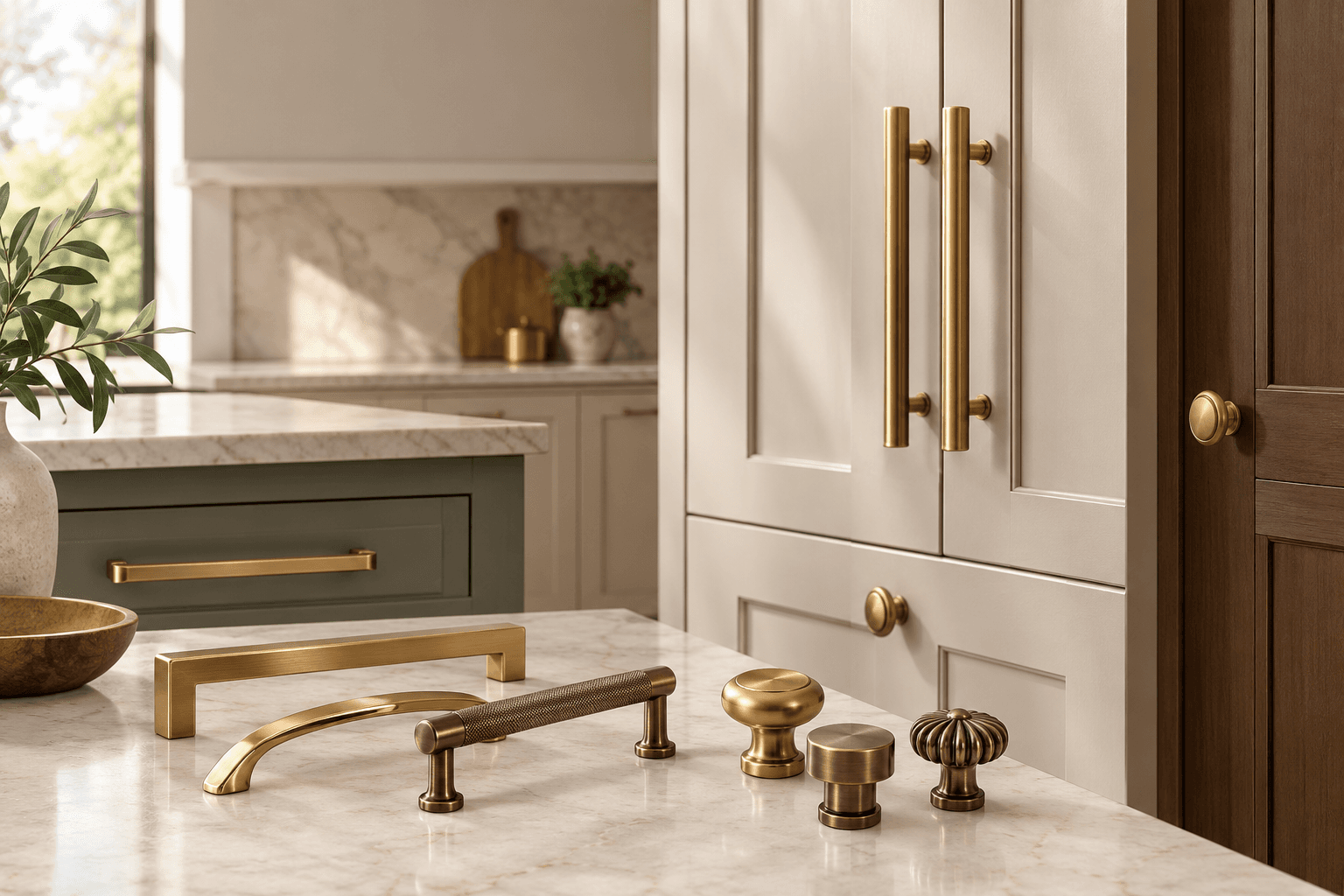
Brass Cabinet Handles and Knobs in Pakistan | Siqbal Hardware
Brass Cabinet Handles and Knobs: Add Warmth and Style to Your Furniture When it comes to furniture and interior design, small details can make a big…
3 October 2026 — 6 min read
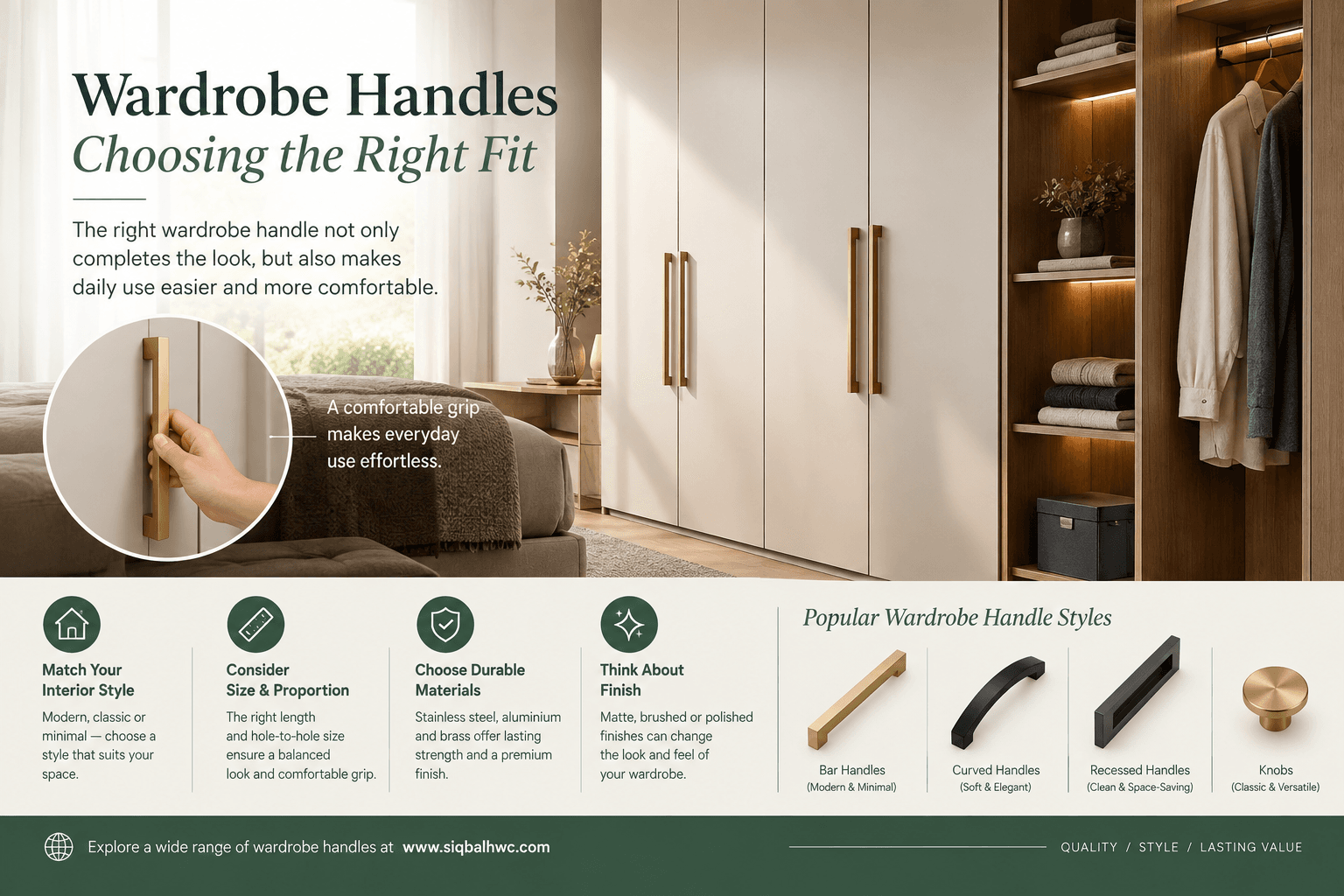
Wardrobe Handles: Choosing the Right Fit
How to choose wardrobe handles that look right and feel good every day: style, length, material, finish and where to place them on large doors.
1 October 2026 — 4 min read