
How to Clean and Care for Brass, Matte Black and Chrome Handles
Most hardware damage comes from the wrong cleaner. Here is what is safe for brass, matte black and chrome — and what to avoid.
By Shahid Iqbal & Co — — 3 min read
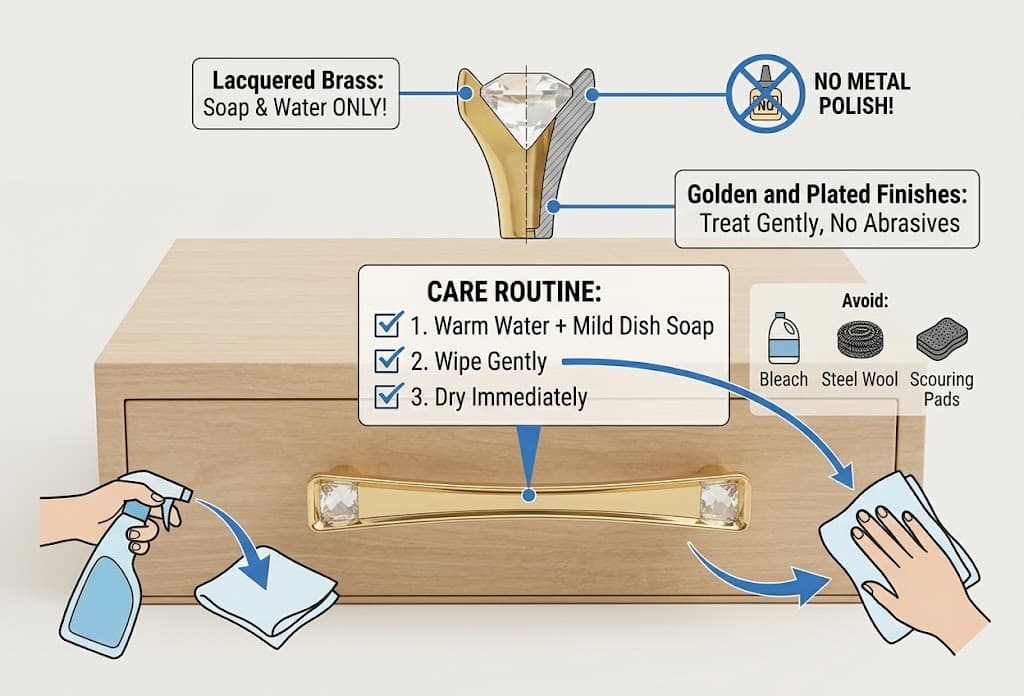
Most damage to handles and knobs comes from the wrong cleaner, not from everyday use. The good news is that the safest method is also the simplest, and it works on nearly every finish.
The basic routine
- Mix a little mild dish soap into warm water.
- Wipe the handle with a soft cloth or microfibre cloth wrung out well.
- Wipe again with a cloth dampened with clean water.
- Dry immediately with a soft dry cloth to prevent water spots.
In kitchens, do this every week or two, because grease builds up quietly and dulls the finish. Elsewhere, once a month is plenty.
Brass
Most decorative brass hardware is lacquered to keep it bright. Treat lacquered brass like any coated finish: soap and water only. Do not use metal polish on it, because polish strips the lacquer and leaves patchy, tarnished spots. If a piece is unlacquered and has dulled, a brass polish used exactly as its label says will bring the shine back — or you can leave it to develop its natural patina, which many people prefer.
Matte black
Matte black finishes are easily damaged by scrubbing. Use a damp microfibre cloth and mild soap. Avoid scouring powders, abrasive pads and polishes — they can burnish the coating into shiny patches or wear it away, especially at the edges.
Chrome
Chrome cleans easily with soap and water. Dry it afterwards to avoid water spots. Avoid bleach and strong acid or chlorine-based cleaners, which can pit or dull the surface.
Golden and other plated finishes
Treat these gently, like lacquered brass: mild soap, soft cloth, no abrasives, and no harsh chemicals. A thin plated layer can wear through if it is scrubbed.
What to avoid on every finish
- Bleach and strong household cleaners
- Steel wool, scouring pads and gritty powders
- Spraying cleaner directly onto the handle — spray onto the cloth instead so liquid does not seep into the screw fittings
- Leaving wet cloths or soapy water sitting on the surface
Keep handles firm
Every few months, check that handles are tight. A wobbling handle loosens further with use. Tighten gently by hand, because over-tightening can strip the thread or crack the fixing.
Choosing hardware that is easy to keep clean
Brushed and satin finishes hide fingerprints, while polished chrome and gold show them more but wipe clean easily. Our finish guide explains the differences, and you can compare cabinet handles in each finish.
Frequently asked questions
How often should I clean my handles?
Every week or two in kitchens, and about once a month elsewhere. Wipe up splashes and grease as soon as you notice them.
Can I use vinegar or lemon to clean handles?
Acidic cleaners can damage some coatings and finishes, so mild soap and water is the safer choice. If you want to try something else, test it on a hidden spot first.
Why has my handle gone dull?
Usually it is built-up grease, dust or hand oils, which soap and water will lift. If the finish itself has worn through, cleaning will not restore it, and replacing the handle is the practical fix.
Ready to choose?
Every product page lists the exact size, finish and hole spacing. Not sure what fits? Send us your measurements on WhatsApp at +92 311 7798157 and we will help you pick.
More guides

Cabinet Handles Price in Pakistan: What Determines the Cost?
Cabinet Handles Price in Pakistan: What Determines the Cost? If you are searching for cabinet handles price in Pakistan, you will quickly notice that prices…
4 October 2026 — 7 min read
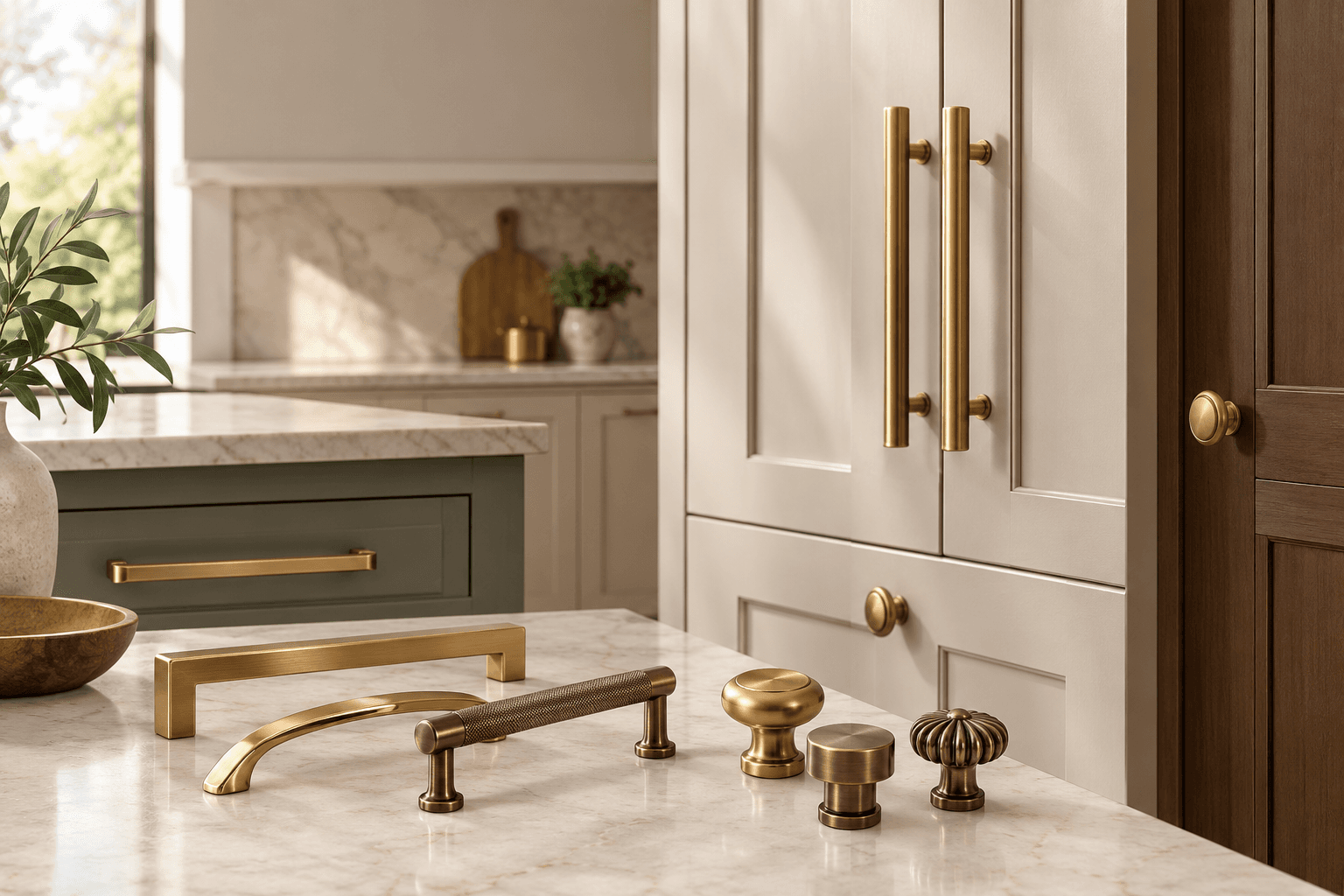
Brass Cabinet Handles and Knobs in Pakistan | Siqbal Hardware
Brass Cabinet Handles and Knobs: Add Warmth and Style to Your Furniture When it comes to furniture and interior design, small details can make a big…
3 October 2026 — 6 min read

Wardrobe Handles: Choosing the Right Fit
How to choose wardrobe handles that look right and feel good every day: style, length, material, finish and where to place them on large doors.
1 October 2026 — 4 min read